Audience
Alarm clocks for kids
Compare sleep trainers, school alarms, controls, power, and age fit.
Compare children’s clocks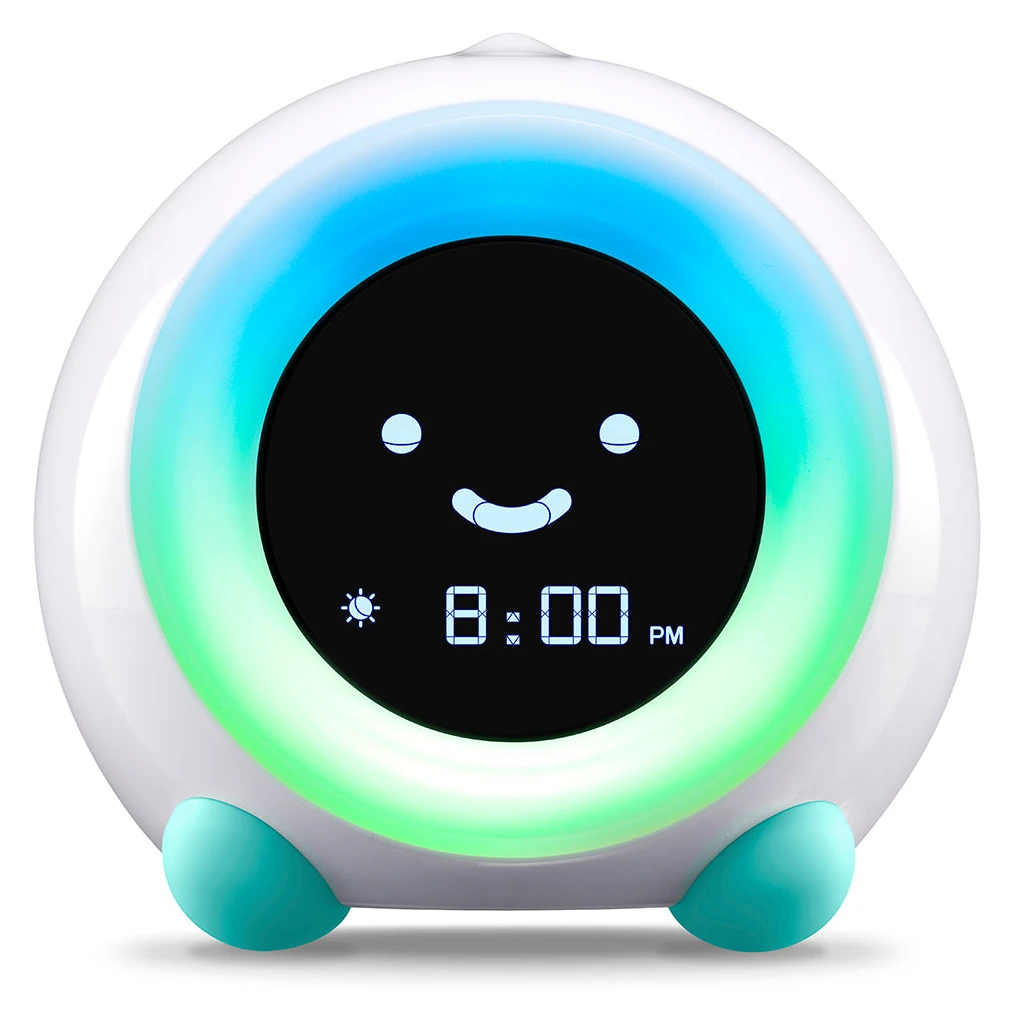
Child Sleep Trainer Review
MELLA combines a color-and-face sleep trainer, alarm clock, night light, sound machine, and nap timer. Its real value depends less on the number of modes than on whether adults turn those modes into one consistent rule a child can understand.
Bottom line
Choose MELLA when a family wants one stationary device to make “stay in bed,” “quiet play,” and “morning” visually different. Do not buy it as a cure for early waking, a cordless travel clock, or a replacement for an age-appropriate sleep routine.
Independent desk-researched review based on LittleHippo’s current MELLA product page, FAQ, support material, and exact official images. No personal-use, sleep-outcome, price, or stock claim is implied.
Direct product link
LittleHippo MELLAConfirm the color variant, regional adapter, current sound count, return terms, and package contents.Check price on AmazonThe first test
Can the child explain the colors?Practice the sequence in daylight before relying on it at 5 a.m.Build the routineCategory context
Compare children’s alarm clocksSeparate simple visual trainers, sound machines, app-controlled devices, and school-age alarms.Open the kids guideRelated Clock Guides
These routes help distinguish a visual routine cue from brightness control, phone dependence, general alarm selection, and the needs of older children.
Quick Verdict
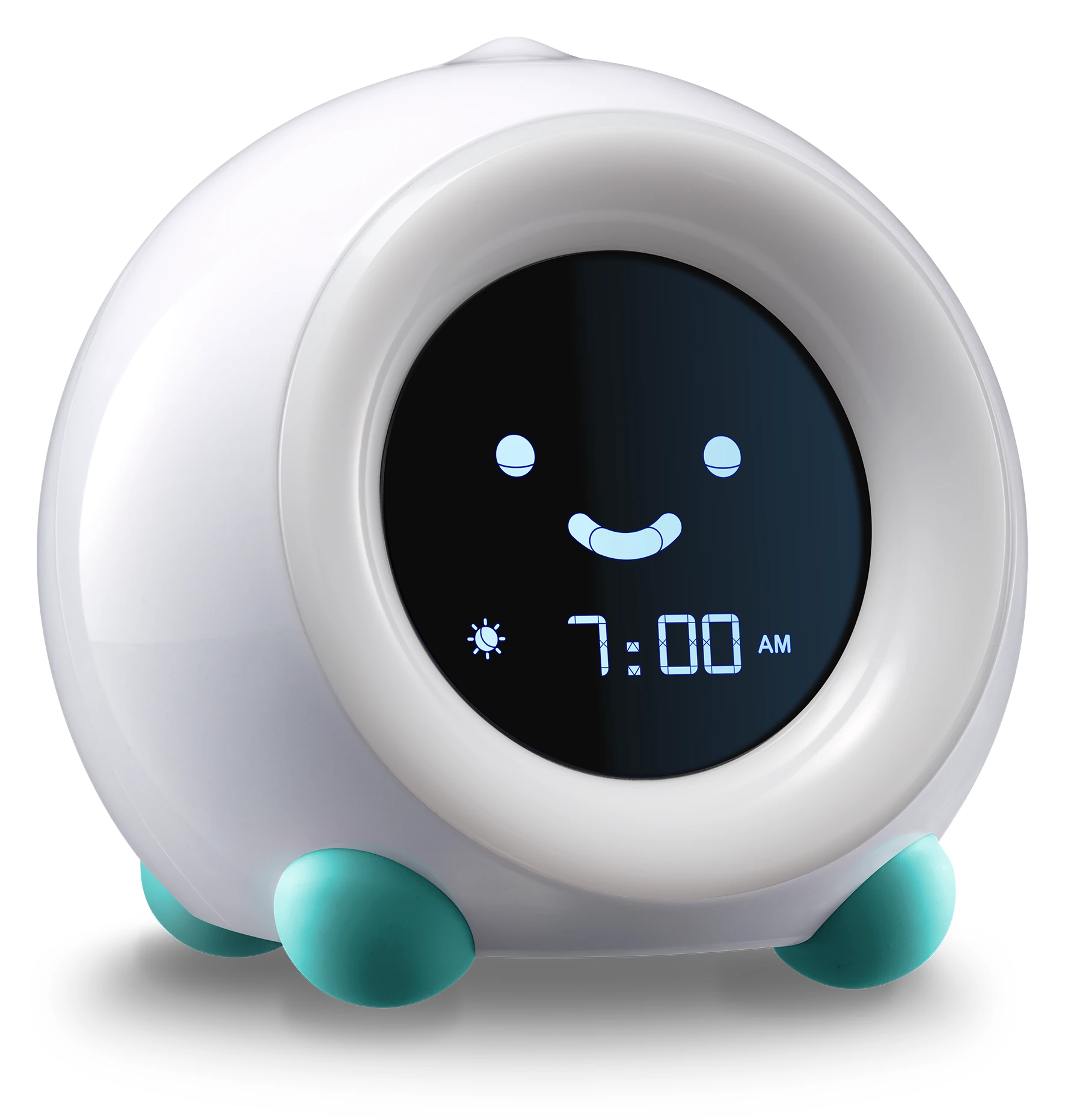
That is the useful question behind MELLA. The round character face changes expression while the light ring moves through sleep, optional play, and wake states. A young child does not need to understand 6:30 on a digital display to recognize that a sleeping face means stay in bed and a green light means the agreed morning has begun.
The clock cannot supply the meaning by itself. Adults must choose a rule that remains the same on ordinary mornings, weekends, and difficult nights. If green sometimes means “get up” and sometimes means “wait until a parent arrives,” the color loses authority. Daytime practice, a short explanation, and predictable follow-through matter more than adding another sound or changing the light every evening.
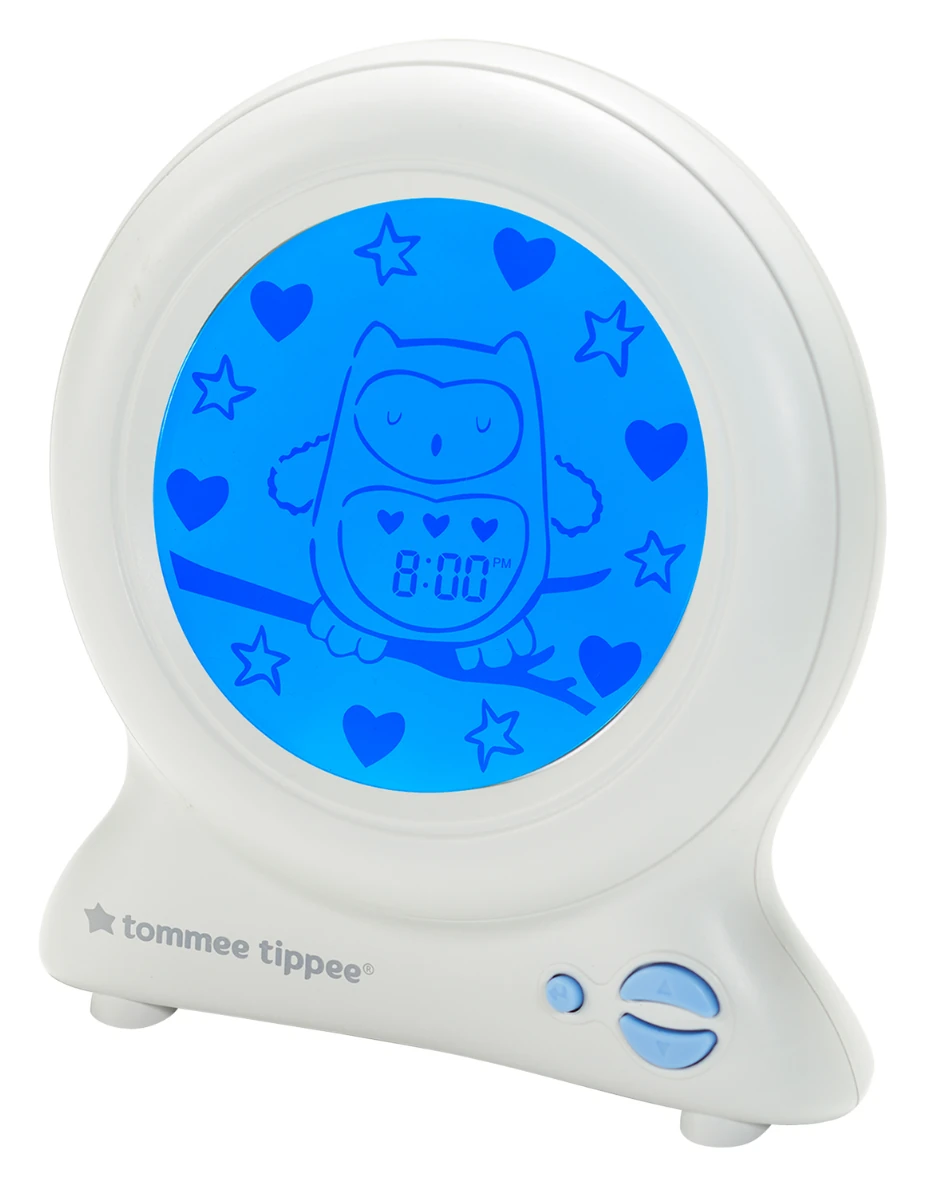
MELLA is broader than a two-color trainer. The current official material lists a night light with six colors, a sound machine, three child-friendly alarm sounds, a nap timer, adjustable brightness and volume, and a child lock. That combination can remove separate devices from a nightstand. It can also create more setup than a family needs. The simpler Tommee Tippee Groclock may fit better when the only requirement is a visual sleep/wake boundary.
Power is the clearest limitation. The included CR2032 supports basic memory; it should not be interpreted as a battery that runs the light, sound machine, display, and alarm through the night. The unit is designed around its USB power cable and adapter. A family that travels frequently, has an accessible outlet problem, or experiences outages needs a separate plan.
LittleHippo’s own current page contains an internal sound-count conflict: an upper marketing bullet refers to three sleep sounds, while the detailed feature copy and specification list six. This review uses the detailed six-sound specification but does not hide the conflict. Confirm the current package or manual if a particular sound library is important.
Sleep, Play, and Wake
MELLA’s visual sequence allows more nuance than a night color and a morning color. During the sleep stage, the face appears asleep. An optional play stage can begin before the final wake time, giving the child permission for a limited quiet activity. At wake time, the light changes to green and the face looks awake. LittleHippo says the green wake state remains active for one hour.
The middle stage is not automatically helpful. For one child it can turn an abrupt boundary into a manageable sequence: stay in bed, then look at books, then leave the room. For another, a new color becomes an invitation to switch on toys, call for a parent, or watch the clock. Start with sleep and wake only. Add play after the child can describe what each existing state means.
Choose actions, not vague labels. “Red means your body stays in bed” is easier to apply than “red means nighttime.” “Yellow means you may look at books quietly, but the door stays closed” is more testable than “yellow means almost morning.” The exact colors should match the current setup, but the important work is attaching one observable action to each state.
The published schedule lets the play cue begin up to 30 minutes before wake time. That window is long enough to make a difference but short enough to avoid creating a second morning. If the child regularly wakes an hour early, the clock does not erase that hour. It provides a boundary while the family examines bedtime, sleep opportunity, room conditions, and other causes.
Practice when no one is tired. Set a demonstration a few minutes ahead, watch the face change together, and ask the child to show what happens at each stage. A correct explanation is more meaningful than enthusiastic button pressing. Repeat the same language at bedtime for several nights before judging whether the cue is understood.
Night Light and Sound Machine
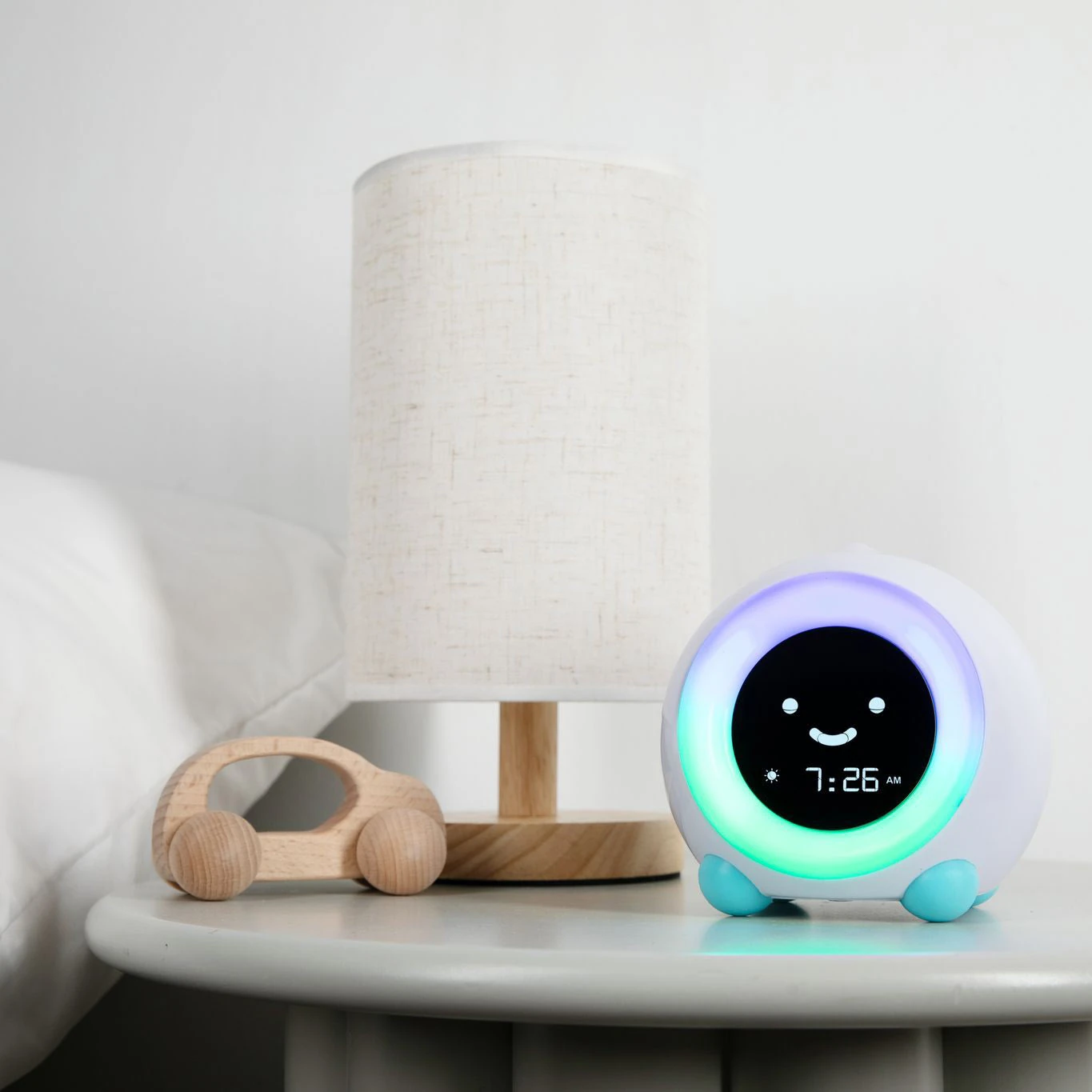
The official specification lists six night-light colors and eight display-brightness levels. That range helps a family find a visible cue without turning the ring into a bright bedside lamp. Begin low in the actual dark room. A setting that looks gentle at noon can illuminate walls, toys, and ceilings after the eyes adapt to darkness.
A stable color language is usually easier than choosing a favorite color every night. If green means morning, avoid using the same green as an all-night decorative light. If red is the sleep cue, keep it attached to that purpose. The device offers options; the routine benefits from restraint.
MELLA also works as a mono sound machine. The detailed current page lists six sleep sounds and five volume levels, while another marketing line on the same page says three sleep sounds. Because the source disagrees with itself, a buyer who cares about a particular sound should check the current product manual or ask LittleHippo before purchase. The three alarm sounds are listed separately from the sleep-sound library.
Sound can mask intermittent household noise, but it should not be treated as a volume contest. Place the clock away from the child’s head, begin at the lowest useful level, and keep the cable inaccessible. A sound that hides a closing door may still allow alarms and caregiving sounds to remain perceptible; a much louder setting may create a new problem.
The alarm function becomes more relevant as the child grows. For a toddler, the visual change may be the primary cue. For a school-age child, a sound can accompany the green state. Do not assume the pleasant child-friendly alarm will wake every sleeper. Test it during a nap or supervised morning and keep an adult backup for important departures.
The middle play stage is optional and should have a defined rule.
Keep wake colors distinct from decorative overnight colors.
Judge brightness after the room is fully dark.
Official sound-count wording currently conflicts; confirm if decisive.

Controls, Lock, and Nap Timer
The compact body puts several functions behind physical controls: time, alarm, sleep/wake schedule, sound, light, nap, brightness, and volume. That is manageable when an adult follows one function at a time. It is confusing when every option is changed during the first bedtime.
Start with the clock time and one morning schedule. Turn on the child lock after confirming the state transition. Add the night light only if the room needs it. Add sound only if it solves a specific noise problem. Add the optional play stage last. This sequence makes troubleshooting possible because the family knows which change affected the routine.
The nap timer is distinct from the main overnight program. That matters in households where the desired nap boundary is relative—quiet time for a set duration—rather than a fixed clock time. Test the nap transition while an adult is present. If its visual state conflicts with the overnight color rule, use the same words and actions to connect them.
A child lock reduces accidental settings changes but cannot make the whole device childproof. The cable, adapter, nightstand, and outlet still need adult placement. Keep the clock where the child can see the face without pulling the lead, reaching an outlet, or knocking the unit onto the floor. Do not place it inside a crib or within reach of a sleeping infant.
The official FAQ suggests sleep-trainer use around age two, while the night light and sound machine may be useful earlier under adult control. Calendar age is only a starting point. Readiness is better shown when the child can notice the change, remember a simple rule, and respond to the same rule during practice.
Power and Memory
LittleHippo lists a 100–240 V input, 5 V output Type-A adapter and a detachable four-foot USB cable. That makes the device straightforward to power at home and potentially usable with an appropriate regional arrangement when traveling. It does not mean every USB source is suitable or that an adapter for every country is included.
The CR2032 backup has a narrower purpose. The official material describes basic memory preservation rather than full operation. During a power interruption, do not expect the light ring, sound machine, display, and audible alarm to continue normally unless the current exact manual explicitly says so. For a high-consequence morning, keep a separate battery-powered alarm or adult backup.
A detachable cable is easier to replace and pack than a captive cord, but it also creates two connection points. Check the adapter end and device end after moving the clock. Route the lead behind furniture without pinching it, keep excess cable away from children, and avoid a plug that can be kicked loose.
Before the first school morning or trip, perform a short interruption test. Record the time and schedule, disconnect mains power briefly, reconnect, and verify what remains. The point is not to abuse the device; it is to learn the difference between saved settings and active output before that difference matters.
Size and Placement
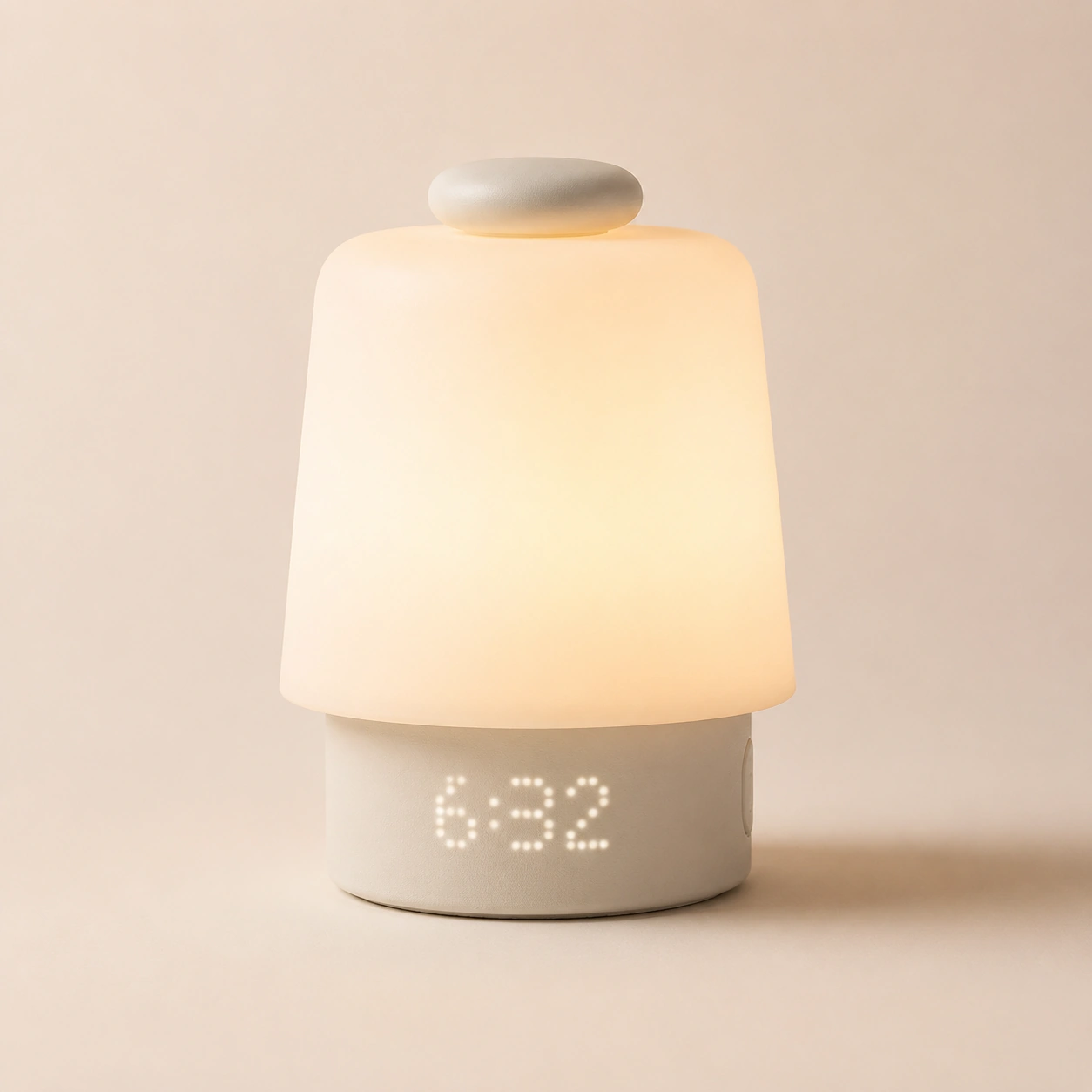
The published dimensions are 4.25 by 4.25 by 4.5 inches, with a listed weight of 0.5 lb. MELLA is compact enough for a child’s shelf or nightstand, but the light ring works only if the child can see it from the normal sleeping position.
Place it at eye level or slightly above the mattress line, not behind toys or books. Turn off the room lights and view it from the pillow. Confirm that the face is recognizable without the ring lighting the whole room. Then check that the child cannot pull the USB cable or reach the adapter.
For travel, pack the adapter and cable with the clock and preserve the same words used at home. A different room already changes sound, darkness, and expectations. Changing colors and rules at the same time makes it harder to know whether the device is helping.
Limitations
A child who is awake before the green light is still awake. The clock can show what happens next, but it cannot make bedtime appropriate, remove discomfort, darken the room, or address a medical sleep problem. If early waking persists, examine sleep opportunity, naps, environment, and health rather than moving the green time later without limit.
The sound-machine and night-light combination may be more stimulation than some children need. The multifunction design also gives adults more settings to misconfigure. A simple two-state Groclock or a plain night light may be the better purchase when fewer cues produce better consistency.
There is no remote app control in the documented feature set. That is a benefit for families who want the phone out of the bedroom and a limitation for adults who need to adjust schedules without entering the room. Decide which constraint matters before comparing decorative features.
The current official page’s three-versus-six sleep-sound conflict is a small but real documentation issue. It does not erase the device’s core visual function, yet it is a reason not to write a purchase plan around an unverified sound list.
Alternatives
Choose Tommee Tippee Groclock when a simple blue-night/yellow-day signal, optional alarm, and physical controls are enough. Its narrower purpose can be easier to explain, but it does not replace MELLA’s sound-machine and multi-color night-light functions.
Choose an app-connected child device such as a Hatch model when remote schedule changes, richer routines, audio libraries, or multi-stage programming justify phone and account dependence. Confirm which functions require a subscription and what remains available offline.
Choose a basic digital alarm or an analog teaching clock for an older child who already understands time and mainly needs independent waking. A sleep trainer’s character face may become unnecessary once the decision is about alarm sound, readability, and school-day reliability.
Choose no new clock when the missing piece is a stable bedtime, room-darkening, or an adult response plan. A device is easier to evaluate after the rule already exists in words.
Seven-Step Setup Plan
Evidence Boundary
LittleHippo’s current product and support pages establish the feature set, dimensions, power arrangement, brightness and volume levels, color sequence, child lock, and general age guidance. Exact official images confirm the model shape and current visual design used in this review.
We did not measure luminance, sound pressure, battery retention time, schedule accuracy, or child behavior. No family trial or sleep improvement is claimed. The review translates documented functions into setup decisions and marks the manufacturer’s conflicting sound-count language instead of resolving it by guesswork.
Product variants and regional package contents can change. Confirm the current adapter, color, manual, warranty, and included items at the official page before purchase.
Final Verdict
MELLA offers a thoughtful set of child-bedroom functions in a compact physical device. Sleep, optional play, and wake faces can make a pre-reading routine visible. Adjustable light, sound, alarms, a nap timer, and a child lock let the clock grow beyond one early-morning problem.
The strongest setup is deliberate: two states before three, low light before bright light, one clear rule before multiple exceptions, and verified mains power before relying on an important alarm. Buy MELLA for a consistent visual language and useful consolidation. Skip it when simplicity, cordless operation, remote control, or professional sleep guidance is the actual need.
FAQ
The adult assigns a rule to each visual state. Sleep usually means remain in bed, the optional play stage can permit a defined quiet activity, and green signals the agreed wake time. Practice the actions in daylight and keep the meaning consistent.
LittleHippo’s FAQ suggests beginning sleep-trainer use around age two, while the night light and sound machine may be used earlier under adult control. Readiness depends on whether the child can notice, remember, and follow the cue; age alone cannot establish it.
No full cordless operation is promised. The official material describes the CR2032 as preserving basic memory. Normal light, sound, display, and alarm functions rely on the USB power arrangement.
The current official page is internally inconsistent: detailed feature/specification text says six sleep sounds, while an upper marketing bullet says three. Confirm the current manual or package if the sound count affects the purchase.
Yes. LittleHippo lists six night-light colors and eight display-brightness levels. Use the lowest comfortable setting in the actual dark room and avoid reusing the wake color as a decorative overnight cue.
Yes. The documented child lock helps prevent button changes after an adult completes setup. It does not replace safe placement of the clock, USB lead, adapter, and outlet.
Yes. A nap timer is part of the current feature set. Test its transitions while an adult is present and use language consistent with the overnight sleep and wake rules.
It can make the family’s boundary visible, but it cannot ensure sleep or change sleep need. Persistent early waking should prompt a review of schedule, naps, environment, routine, and health rather than endless alarm adjustments.
MELLA is broader, adding a sound machine, multi-color night light, nap timer, and a three-stage visual routine. Groclock is deliberately simpler. Choose the smallest system that covers the child’s real rule and the adults’ setup tolerance.
Editorial Review Notes
A family that wants a physical, app-free visual routine cue plus adjustable night light, sound, alarm, nap, and lock functions.
Mains power and adult consistency remain essential; the memory cell does not make the clock cordless and the device cannot ensure sleep.
Features come from LittleHippo. The current sound-count conflict is disclosed, and no child outcome or hands-on measurement is invented.
This is an editorial model assessment, not a customer-submitted rating. It does not claim measured brightness, loudness, battery runtime, behavioral success, price, stock, or personal testing.