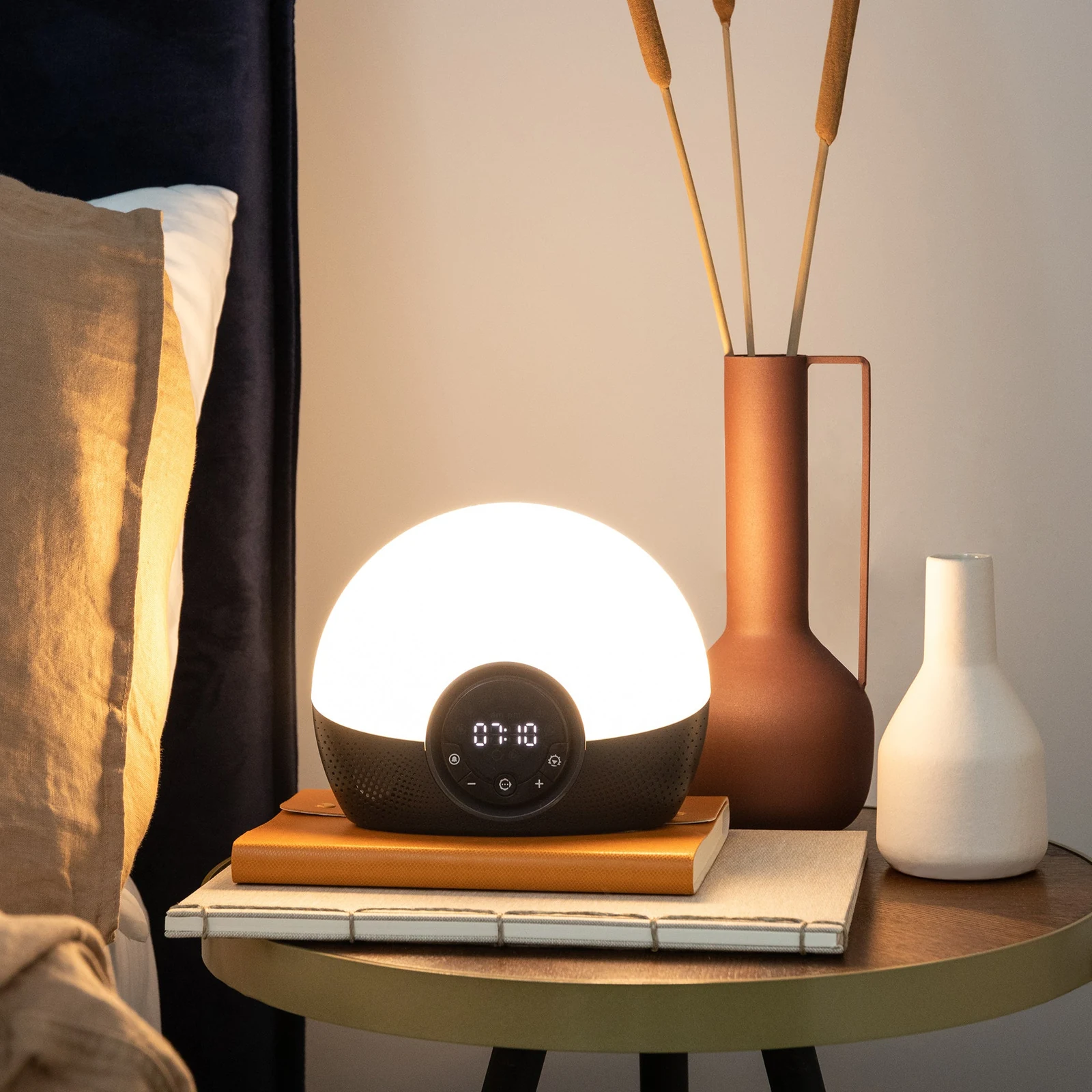
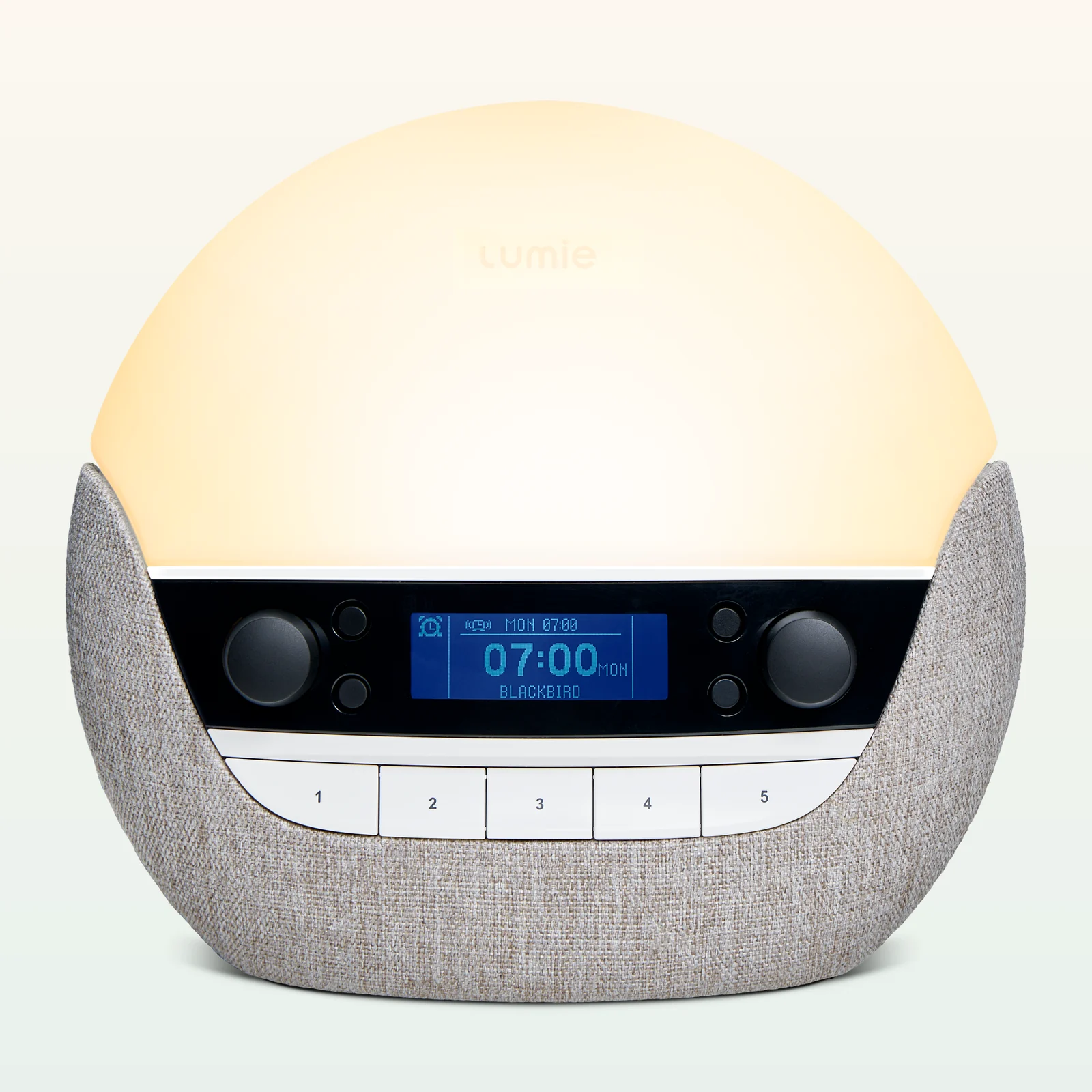
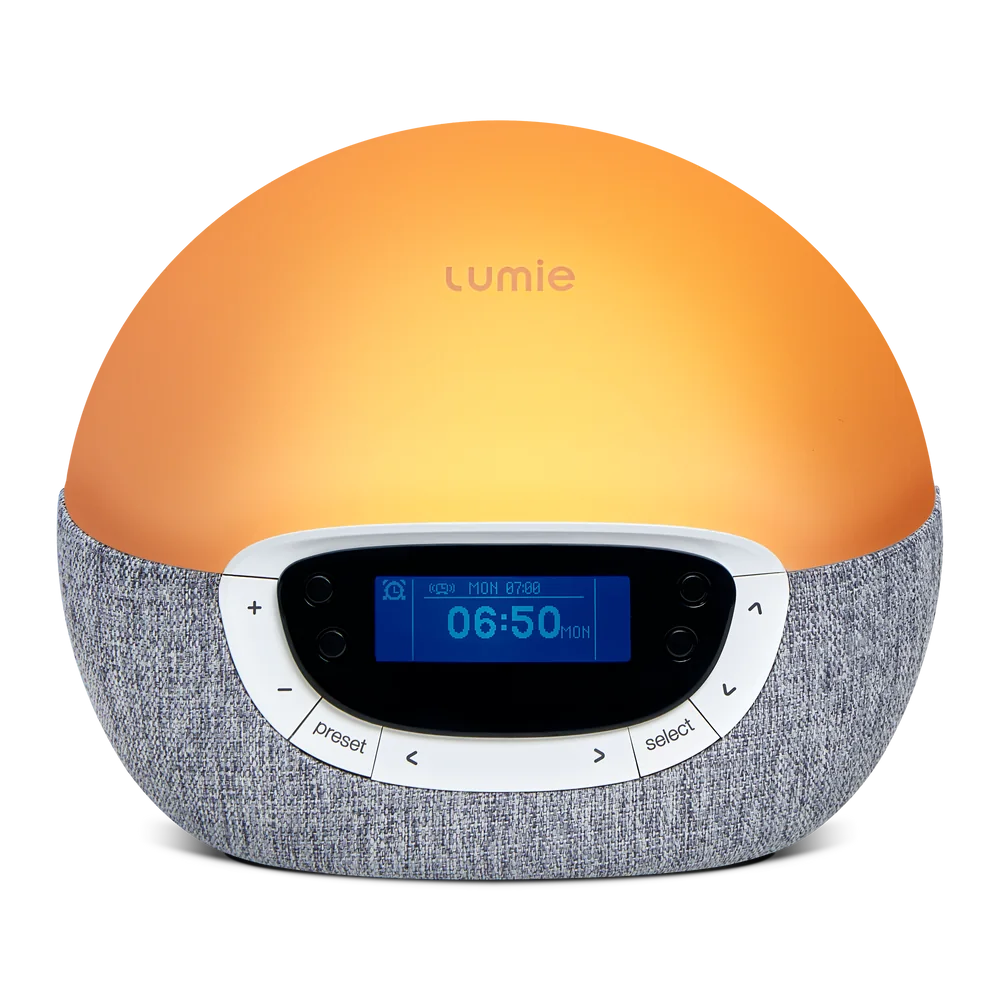
Set the clock
Enter current hours and minutes after connecting the supplied adapter.

Exact-Model Sunrise Alarm Review
Rise 100 keeps the useful path short: one stored alarm time, a fixed 30-minute sunrise, an optional beep at wake time, a matching sunset and controls that stay on the clock.
Bottom line
Choose it when a fixed, on-device routine is the point. Skip it when you need adjustable ramp length, several schedules, varied wake sounds or an alarm that operates through a power outage.
Desk-researched from Lumie’s US product page and North American manual. No hands-on, laboratory, medical-outcome or current-price claim is implied.
Exact retail entity
Lumie Bodyclock Rise 100Confirm ASIN B082VB63F5, the supplied US adapter, seller and return terms before ordering.Check current availabilityCritical routine boundary
Arm it before sleep each timeThe clock stores an alarm time, but the North American manual requires nightly activation.See the setup logicCompare the need
Sunrise alarm clocksCompare fixed and adjustable light ramps, sound backup, schedules and control dependencies.Open the buying guideQuick Verdict
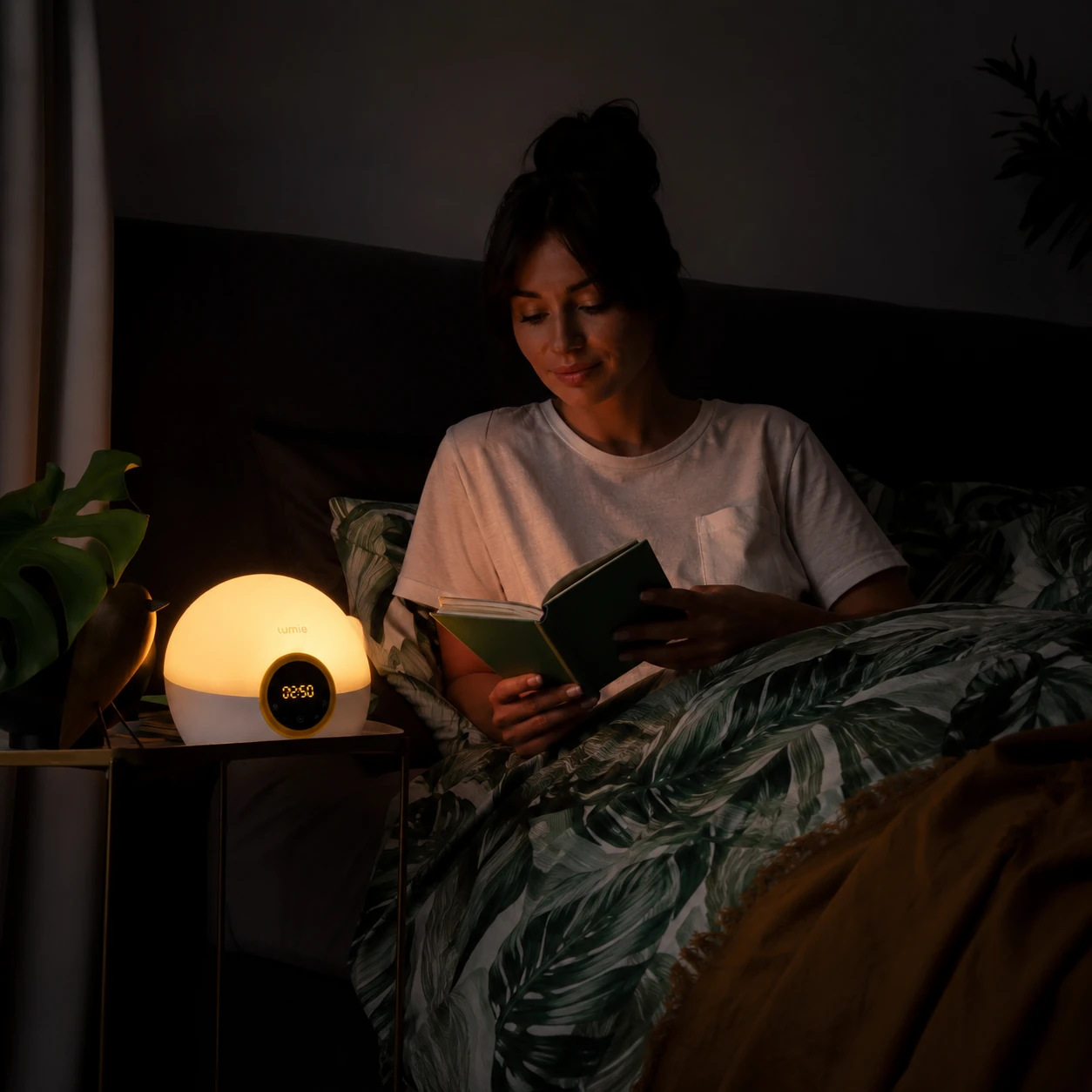
The Lumie Bodyclock Rise 100 is easiest to judge when the decision starts with routine rather than feature count. Its documented morning sequence lasts 30 minutes. The light moves toward a final intensity selected from levels 1 through 5, and an optional beep can sound when the sunrise ends. At night, the lamp can run a matching 30-minute sunset and either switch off or settle at a chosen nightlight level. The clock display can also turn fully off in a dark room. All of that is configured on the unit.
The limit is just as clear. The official North American instructions document one alarm time, not a bank of alarms or a weekday calendar. More important, the alarm has to be activated before sleep each time. A person with a steady schedule may find that nightly press reassuring because the alarm symbol gives a visible confirmation. Someone who expects an alarm to repeat automatically every weekday can miss a morning simply because the stored time was never armed.
Rise 100 therefore fits a narrow but coherent need: a physical wake-up light without an app-shaped routine. It does not offer a sound library, radio, streaming source or adjustable sunrise duration in the documented controls. Those omissions reduce setup choices, yet they also remove accounts, phone screens and network troubleshooting from the alarm path described by Lumie. Simplicity is valuable only if the fixed choices match the sleeper.
Do not buy it as a guaranteed cure for sleeping through alarms. Lumie lets the user combine light and a beep, but the official sources do not provide a measured alarm volume, a pillow-level illuminance figure or evidence that every sleeper will wake. When a missed alarm could affect safety, travel, medication, work or caregiving, a separately verified battery alarm remains the sensible backup.
Exact Model Boundary
This page reviews the Lumie Bodyclock Rise 100 and no other Lumie clock. The exact Amazon entity supplied for the US buying route is ASIN B082VB63F5. That identity check matters because retailer titles, family comparisons and older articles often compress several Bodyclock products into the word “Lumie.” A sound or schedule described for one family member can then appear to belong to all of them.
Rise 100 should not inherit variable-duration settings, multiple wake sounds, radio, weekly schedules or other controls from Glow 150, Shine 300 or Luxe models. It should not be renamed Rise 150 or Rise 300 because a marketplace title combines terms. The safest check uses three things together: the exact Bodyclock Rise 100 name, the B082VB63F5 entity and the North American Rise 100 manual.
The evidence boundary also protects the recommendation. This is a desk-researched review, not a report of ownership or a laboratory test. Lumie publishes the operating sequence and physical specifications. It does not publish the light level that will reach a particular pillow, the beep level in decibels or a result for a particular sleeper. Those outcomes depend on placement, room geometry, hearing, light sensitivity and sleep conditions, so the article turns them into checks rather than promises.
| Field | Exact Rise 100 value | Do not import |
|---|---|---|
| Model | Lumie Bodyclock Rise 100 | Rise 150, Rise 300, Glow 150 or Shine 300 identity |
| Amazon entity | B082VB63F5 | A different ASIN sharing family-level images |
| Wake audio | One optional beep | Nature sounds, FM radio or streaming |
| Sunrise timing | 30 minutes | Variable duration from another Bodyclock |
| Schedule | One documented alarm time, armed nightly | Multiple alarms or automatic weekly recurrence |
Setup and Controls
Lumie’s North American manual begins with a conventional physical setup. Place the unit on a stable, level, nonslip surface near a mains socket, connect the supplied adapter to the base and plug it in. The display flashes until the current time is entered. Hours and minutes are adjusted with the minus and plus buttons and confirmed with the forward button. No account, wireless network or phone step appears in that setup path.
The alarm sequence is similarly compact. Hold the alarm button, set the alarm hour and minute, select the final sunrise intensity, then select the optional beep volume. Both intensity controls use levels 0 through 5. Sunrise level 0 turns off the light sequence; beep level 0 turns off the audible alarm. Lumie prevents a silent, dark alarm by requiring the beep when sunrise intensity is set to zero.
Saving those choices does not arm tomorrow’s alarm. Before going to sleep, press the alarm button once and look for the alarm symbol together with the saved time. The manual says this activation is required each time. That one step belongs in the nightly checklist in the same way that locking a door or placing a phone on charge does. If the step already sounds easy to forget, the product is a poor fit regardless of how appealing the light looks.
Run the first alarm during the day. Set it a few minutes ahead, watch the sequence, let the beep start, try snooze and then stop it. A daylight rehearsal separates four actions that otherwise arrive while half awake: changing a setting, arming the alarm, postponing it and dismissing it. The review cannot establish whether the buttons feel intuitive to a particular user; the rehearsal can.
Enter current hours and minutes after connecting the supplied adapter.
Choose hours, minutes, final light intensity and beep volume.
Press the alarm button and confirm the alarm symbol every night.
Practice snooze, stop and light-off actions before a work morning.
Fixed Light Sequence
Rise 100 begins its sunrise 30 minutes before the stored wake time and reaches the selected final intensity at the alarm time. The official control sequence offers five nonzero final-light levels plus zero for no sunrise. It does not expose a duration setting. A buyer can change how bright the sequence ends, but not whether it takes 15, 45 or 90 minutes.
That fixed relationship is useful for a regular morning. A 6:30 a.m. wake time means the programmed light sequence starts at 6:00 a.m. It can be inconvenient for someone who responds to the first visible glow rather than the endpoint, especially in a shared room. Start below the maximum and keep a separate audible backup while learning when the light becomes noticeable. Change placement before assuming that maximum intensity is necessary.
The sunset uses the same 30-minute headline, with one practical qualification. It begins from the bedside-light level selected with the plus or minus button. Lumie’s support guidance explains that a sunset begun below full brightness can reach darkness sooner because the fade is relative to its starting level. Set nightlight to 0 when the goal is complete darkness, or choose levels 1 through 5 when a low light should remain after the fade.
A sunset is a cue, not a sleep guarantee. The useful question is whether the gradual reduction replaces a brighter evening light or marks a consistent end to reading. Keep the starting brightness and bedtime reasonably stable during the first week. If every evening uses a different lamp level, the owner cannot tell whether the 30-minute routine is comfortable or simply unpredictable.

Audible Backup and Snooze
The only documented wake sound is a beep. Its volume uses levels 1 through 5, with level 0 disabling it. When enabled, the beep sounds at the end of the sunrise rather than at the start of the 30-minute ramp. This makes it a deadline behind the light: the room changes first, then the sound arrives at the selected wake time.
Light-only waking is possible by selecting a sunrise level from 1 to 5 and leaving the beep at 0. Beep-only waking is possible by setting sunrise to 0 and selecting a beep level from 1 to 5. The manual does not allow both to remain at zero for an alarm. That interlock is worth checking during setup because a buyer may otherwise assume “optional beep” means every combination is accepted.
Tap the top of the lamp cover to snooze. The manual says the sunrise and the beep, if selected, repeat after nine minutes. To end the alarm instead, press any button; hold the minus button to switch off the remaining light. Rehearse that distinction with eyes closed. Tapping by reflex creates another nine-minute cycle, while a deliberate button press dismisses the wake sequence.
If the tap is not detected, Lumie’s exact-model support page suggests tapping closer to the lower front or back of the unit, where its vibration receptors are located. That is manufacturer troubleshooting, not a TOPCLOCKS test result. If reliable snooze detection is important, reproduce the action during the return window rather than assuming every tap angle works the same.
Night Comfort
The clock display reacts to room light automatically. In a dark room, a switch in the base chooses between two behaviors: OFF or LOW. OFF removes the visible time during sleep. LOW keeps it readable at reduced brightness. When the display is off, tapping the top briefly brings the time back at low brightness, which preserves a dark room without making the clock unreadable when the time is genuinely needed.
This control separates two light sources that buyers often collapse into one. The digits have their OFF/LOW choice; the main lamp has a separate bedside level and a separate nightlight endpoint. A person can therefore let the display disappear while keeping a low nightlight, or let both go dark after sunset. Check both from the pillow after the eyes have adjusted, not while another lamp is still on.
Outside the programmed routines, plus and minus make Rise 100 a fully dimmable bedside lamp. Lumie’s US page describes it as suitable for brighter reading light or a softer hue, but the company does not provide a measured reading level at a stated distance in the sources used here. A buyer who needs task lighting should test the smallest comfortable print in the normal position rather than treat “reading light” as a quantified output.
The nightlight decision matters in shared rooms. A low persistent glow can help with a short nighttime trip, yet it can also disturb a light-sensitive partner. Start with a fade to off. Add a level 1 nightlight only if darkness creates a real problem, then move upward one step at a time. That sequence keeps the room requirement in control of the setting.
Power and Outage Boundary
Rise 100 is powered by its supplied mains adapter. The manual lists an adapter input of 100–240 Vac at 50/60 Hz, up to 0.4 A, and an output of 12 V DC at 1 A, or 12 W. That wide input range does not by itself make the clock a travel product. Plug shape, local adapters, warranty region and physical packing still have to match the trip, and Lumie tells owners to use the supplied adapter.
The manual gives two useful retention facts. The clock keeps time for 30 minutes without power, and all other settings are permanently saved. Those statements reduce the work of recovering from a brief interruption. They do not say that the integrated LEDs or beep operate while mains power is absent. A retailer phrase such as “power failure back-up” should therefore be read as time and settings retention, not as a battery that runs the morning alarm.
This distinction changes the recommendation for critical mornings. If a storm, unstable circuit or accidental unplugging is plausible, use a genuinely battery-powered second alarm. Do not unplug Rise 100 overnight simply to see what happens. A short daytime check can confirm that the time and settings return as the manual describes, but only a manufacturer statement could establish wake-light operation during the outage—and the cited manual does not provide one.
Placement is part of power reliability. Keep the adapter where bedding cannot pull it loose, keep it away from heated surfaces and do not cover the lamp while it is on. The manual says the unit becomes warm during lighting and belongs on a stable, level, nonslip surface. These are ordinary instructions, but they matter more than a decorative bedside arrangement when the alarm is expected to work every morning.
| Function | Official statement | Safe interpretation |
|---|---|---|
| Current time | Kept for 30 minutes without power | A brief interruption need not force an immediate clock reset |
| Other settings | Permanently saved | Alarm choices should remain stored after power returns |
| Sunrise light during outage | Not stated | Do not assume it runs |
| Alarm beep during outage | Not stated | Do not assume it sounds |
Real Bedroom Scenarios
A regular winter workday. This is the cleanest Rise 100 use case. The sleeper gets up at nearly the same time, wants the room to brighten before a deadline and prefers not to open an app at night. Set one alarm time, choose a moderate final light level, keep the beep enabled during the first week and confirm the alarm symbol before sleep. The fixed duration removes one decision. Nightly activation remains the one behavior that cannot be delegated.
A shared bed with different wake times. Rise 100 may still work, but the partner becomes part of the setup. The light starts 30 minutes before the selected time and cannot be shortened. Angle and level therefore need to be chosen for the intended sleeper without turning the whole room bright too early. If the partner wakes at the first red or orange glow, a personal vibration alert or a more directional device can be kinder than pushing the Rise 100 to a lower level that no longer helps its owner.
An irregular shift or changing school schedule. One saved time and nightly arming create more friction. The clock can be reset, but the official workflow is not a weekday/weekend calendar. A worker alternating early and late shifts must edit the time and then arm it correctly. A model with multiple visible schedules is usually safer when schedule complexity, not phone avoidance, is the nonnegotiable need.
A very dark room with light-sensitive sleep. The OFF display mode is a genuine advantage. Let the digits disappear, set the sunset nightlight to zero and tap the lamp only when the time is needed. Morning intensity still needs care. Start at level 1 or 2 with the beep active, then raise the endpoint only after placement remains unchanged for two mornings. That method distinguishes sensitivity to early light from a lamp that is simply blocked.
A high-consequence wake time. Rise 100 can provide the light layer and its optional beep, but it should not be the only path until the owner has verified several mornings. Use a separate battery alarm for an early flight, medical duty, caregiving handoff or job where a missed start cannot be absorbed. The second alarm is not an admission that sunrise waking “failed.” It covers the documented mains boundary and the unknown individual response.
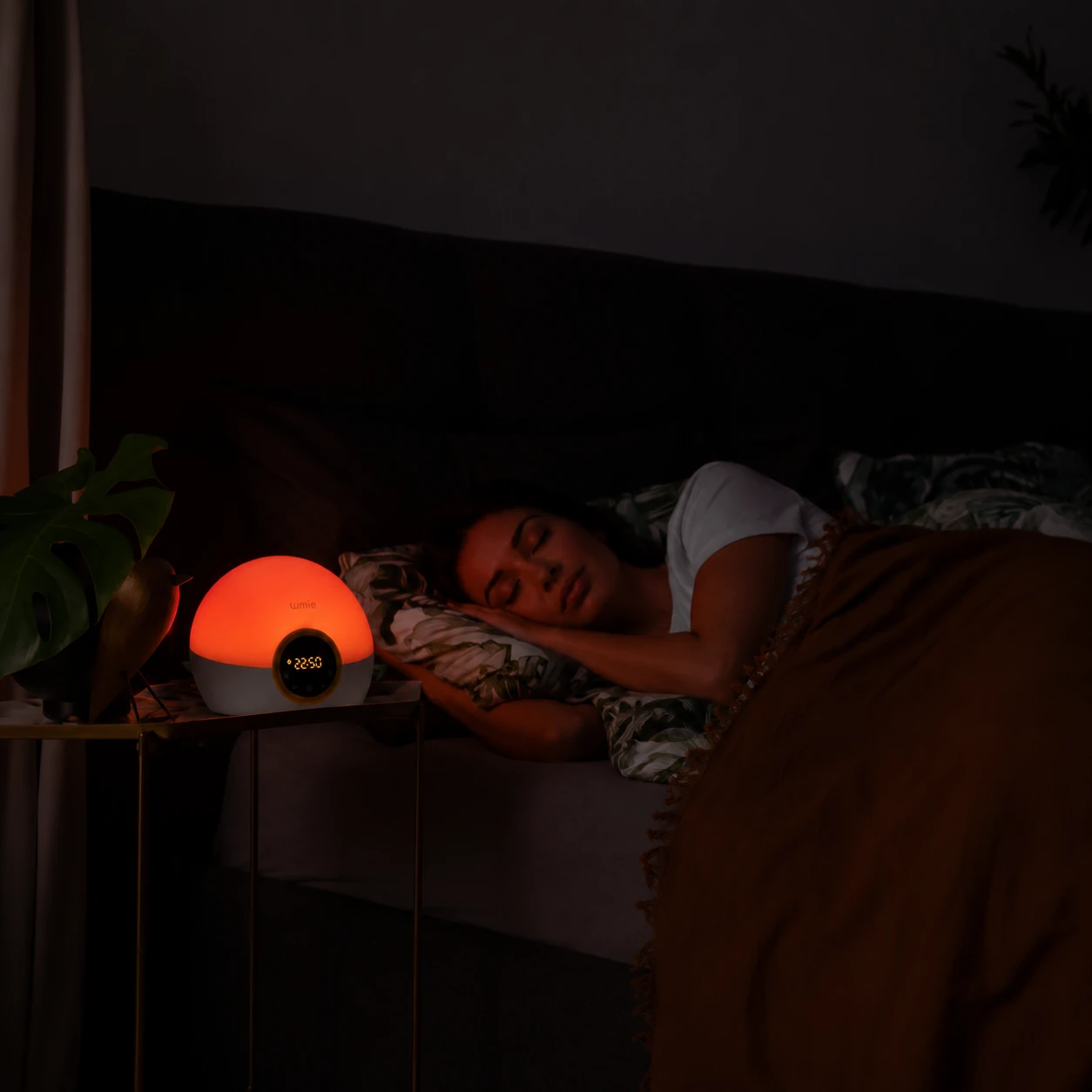
These scenarios are decision models, not reported tests. They show which documented control becomes important when the room or schedule changes. The actual wake response has to be learned in the room, with the normal pillow position, normal curtains and the person who will rely on the alarm.
Comparison Boundaries
Rise 100 should be compared with another clock only after naming the function that the fixed routine cannot provide. If the problem is the 30-minute duration, choose a clock whose official manual documents several ramp lengths. If the problem is one alarm time, compare schedule capacity and repeat logic. If the problem is one beep, compare built-in alarm sources. A family badge or a longer feature list does not answer any of those questions by itself.
A more configurable Lumie may add duration or sound choices, but those details must come from that model’s own manual. They do not flow backward into Rise 100. The same caution applies to visually similar third-party listings. Product photographs, control labels, ASIN and manual title must point to the same device before a comparison is valid.
Philips SmartSleep HF3520/60 is a useful alternative when the buyer wants additional on-device alarm options and a more configurable classic sunrise clock. Philips HF3650/60 goes further with a broader evening and audio system while remaining a physical-control product. Hatch Restore 3 is the opposite ownership decision: the app builds a richer routine, and optional paid content can be part of the experience. ANJANK GlowRise suits shoppers who prioritize numerous app-managed schedules. Dreamegg Sunrise 1 is a lower-cost sound-and-light route. Each alternative changes a control or ownership boundary, not merely the shape on the nightstand.
| Nonnegotiable need | Rise 100 fit | Comparison route |
|---|---|---|
| Fixed, on-device light routine | Strong fit | Stay with Rise 100 if nightly arming is acceptable |
| Several sunrise durations | Weak; 30 minutes is fixed | Verify an adjustable model’s exact manual |
| Several alarm times or weekly schedules | Weak; one documented time | Compare multi-alarm physical or app-managed clocks |
| Nature sounds or radio | Weak; one optional beep | Compare Philips or another documented audio alarm |
| Phone-built routines and changing content | Not the documented ownership model | Compare Hatch Restore 3 or another connected system |
| Outage-powered waking | Not established | Add a verified battery alarm |
Use the sunrise alarm clock guide for a broader model shortlist. If the remaining question is whether light or sound should carry the wake deadline, the sunrise-versus-sound comparison is the more useful next page.
Who Should and Should Not Buy
Rise 100 is a strong fit for a buyer who can describe tomorrow’s wake plan in one sentence: “Start the light 30 minutes before this time, then use a beep if I have not already woken.” That person does not need a phone in the bedroom, a library of sounds or a different automatic routine for every day. The display’s OFF option also gives the product a clear role in a room where glowing digits are unwelcome.
It can also suit a first-time wake-light buyer who wants to learn whether gradual light is useful without building an app ecosystem. The correct expectation is a controlled experiment, not a promised transformation. Keep the existing alarm, adjust one setting at a time and decide whether the light makes standing up easier or the evening fade replaces a harsher lamp. Either observation is more useful than a generic “morning person” claim.
Choose something else when the schedule is the hard part. Rotating shifts, separate weekday and weekend times, two sleepers with independent alarms or frequent last-minute changes expose the one-time-setting workflow. Nightly activation can be a reassuring check for one person and a repeat failure point for another. The buyer should be honest about which pattern is more likely.
Rise 100 is also the wrong tool when the wake pathway requires very loud sound, vibration or verified accessibility equipment. The manual gives five beep levels but no decibel figure and no hearing-accessibility claim. Light and an ordinary beep can be useful layers; they are not a substitute for a bed shaker or a device designed for a documented alerting need.
Finally, do not use the clock to shorten sleep or present it as treatment. Lumie’s own safety instructions say Bodyclock does not reduce the need for sleep and advise consulting a doctor before use when serious depression is present. A wake-up light can support a routine. Persistent extreme difficulty waking, seasonal depression or another health concern deserves appropriate professional advice instead of stronger marketing language.
Seven-Night Verification
This protocol is for the future owner. It is not evidence that TOPCLOCKS used the product for seven nights. Keep a dependable secondary alarm active throughout the week, and do not schedule the first trial before a flight, examination, medical duty or other high-consequence commitment.
At the end of the week, make a fit decision with three questions. Did the fixed 30-minute ramp help without waking too early? Was the single beep enough backup at a comfortable level? Did nightly arming feel reassuring or fragile? If two answers are negative, another clock is likely a better route. More weeks of changing every setting will not add schedule functions that Rise 100 does not have.
Specifications
| Specification | Documented value | Buying meaning |
|---|---|---|
| Sunrise / sunset | 30 minutes / 30 minutes | Fixed timing; final sunrise intensity is adjustable |
| Sunrise intensity | 0–5 | 0 disables sunrise; 1–5 select the endpoint |
| Alarm beep | 0–5 | Optional unless sunrise is set to 0 |
| Snooze | 9 minutes | Tap the lamp cover; light and selected beep repeat |
| Alarm timeout | 90 minutes | Light and beep stop automatically if not dismissed |
| Nightlight endpoint | 0–5 | 0 fades to off; 1–5 retain low light |
| Display in darkness | OFF or LOW | A base switch chooses complete darkness or low digits |
| Bedside-light timeout | 12 hours | Unattended lamp switches off automatically |
| Light source | Integrated warm white, orange and red LEDs | Typical stated LED life is 30,000 hours; not user-replaceable |
| Dimensions | 6.3 H × 7.5 W × 4.7 D inches | Confirm the physical nightstand area before ordering |
| Weight | 1.25 lb / 0.565 kg | Manufacturer US figure |
| Power adapter | 100–240 Vac input; 12 V DC, 1 A, 12 W output | Use the supplied adapter; no battery alarm operation is stated |
| Time without power | 30 minutes | Time retention, not documented light or beep operation |
| Operating range | 41–95 °F / 5–35 °C | Allow one hour before power-up after storage outside this range |
| Warranty | 3-year manufacturer wording on the cited US page/manual | Verify current terms, exclusions and seller eligibility |
Numbers in this table come from Lumie’s US product page and North American guide. They are not measurements taken by TOPCLOCKS. Product packaging and warranty terms can change, so the supplied manual and seller terms should be checked at purchase.
FAQ
The official North American setup and operating flow is entirely on the clock. It describes no app, account, Wi-Fi or network step. This review therefore treats the documented alarm as an on-device routine rather than importing connected features from another model.
No alternative duration appears in the official Rise 100 controls. The documented adjustment is final sunrise intensity from 0 to 5. Choose a different model if duration itself must change.
No. Lumie says the optional beep sounds at the end of the sunrise, at the stored alarm time. The light provides the preceding 30-minute sequence.
Yes. Select sunrise intensity 1–5 and set beep volume to 0. For beep-only waking, set sunrise to 0 and beep to 1–5. The manual requires a beep when sunrise is disabled, so both cannot be set to zero for an alarm.
Do not assume that. The manual documents one stored alarm time and says the alarm must be activated before sleep each time. Confirm the alarm symbol every night.
Snooze lasts nine minutes. Tap the top of the lamp cover; the sunrise and beep, if selected, repeat afterward. Press any button to stop the alarm instead.
Yes. A base switch selects OFF or LOW behavior in darkness. When OFF is selected, tapping the lamp shows the time briefly at low brightness.
Yes. Choose nightlight 0 for a fade to off. Levels 1–5 leave the selected nightlight after the sunset. Because sunset begins from the current bedside-light level, starting below full brightness can shorten the time to darkness.
The cited manual does not say that the light or beep operates without mains power. It says the clock keeps time for 30 minutes and saves other settings permanently. Use a separately verified battery alarm when outage operation matters.
The official sources provide no wake guarantee, measured beep level or pillow-level light result. A heavy sleeper may need a louder documented alarm or vibration. Test Rise 100 with a dependable backup before relying on it.
No. Lumie’s manual says the product does not reduce the need for sleep and advises medical consultation before use when serious depression is present. Treat it as a routine tool, not a treatment claim.
The exact supplied entity is ASIN B082VB63F5. Confirm that the listing, model label, product images and supplied manual all say Lumie Bodyclock Rise 100 before ordering.
Primary Sources
The manufacturer pages establish product operation; Amazon is used only to bind the review to the exact retail entity. Dynamic price, availability, seller, delivery and rating statements are deliberately excluded. Research checked August 31, 2026.